Whoops! You cannot enter the site!

Are you over
21 years old?

By entering this site you are agreeing to the Terms of Use and Privacy Policy.

Black Tie Blog

Thank you! Your submission has been received!
Oops! Something went wrong while submitting the form.
Weed Moon Rocks vs Hemp Moon Rocks: What you need to know about our Hemp Asteroids aka Moon Rocks

In the cannabis world, moon rocks are like top-notch caviar: pricey, high-quality, and an exceptionally special experience. Our Asteroids are similar to moon rocks, except that they’re made with hemp, not cannabis. This means that, while smoking moon rocks get you super-duper high, Asteroids are extremely relaxing and potentially sedating. So, what are moon rocks weed, and Asteroids?

Great as an occasional treat, Asteroids are a unique hemp product that contains a high percentage of CBD and an interesting terpene profile. They’re perfect for hemp connoisseurs who’d like a more potent experience.

Here’s what you need to know about Asteroids, and how they differ from moon rocks.

What are moon rocks?

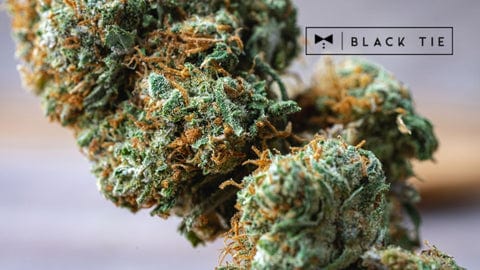
Moon rocks are powerful little nuggets of cannabis, brimming with cannabinoids and terpenes. Essentially, they are cannabis buds that are covered in the distillate, which is a sticky substance made of concentrated cannabis oil that is incredibly potent.

Smoking moon rocks weed

After the sticky stuff is on the cannabis bud, the bud is then dusted with kief - those tiny, sticky bits of resin that are found all over a cannabis flower. Because the resin is where most of the cannabinoids and terpenes are found, kief is effective, aromatic, and flavorful.

What you have then is a cannabis bud covered with a layer of distillate and then a layer of kief, giving you an extremely potent, highly concentrated dose of cannabinoids and terpenes. Leaflyestimates that most moon rocks are around 50 percent THC, while a normal, strong bud is between 17 and 28 percent THC.

As you can imagine, moon rocks are quite pricey - but a small amount goes a long way, so it works out to be cost-effective for many buyers to buy moon rocks as they’ll only use a tiny amount at a time.

What sets Black Tie CBD’s Asteroids apart from moon rocks?

We’ve taken the much-loved moon rock and improved on it to create our one-of-a-kind Asteroids. While Asteroids are structurally the same as moon rocks, they produce a very different effect.

Instead of cannabis flower and cannabis-based distillate and kief, we make Asteroids from hemp-based ingredients, creating a non-intoxicating, low THC version of moon rocks. This means that Asteroids are low in THC and high in CBD. You will like smoking moon rocks Asteroid because the light smoke moon rocks will have new sensations.

When creating Asteroids strain, we took care to avoid certain problems that usually pop up with moon rocks. There are two major problems with combining distillate and rolled in kief on a bud. Firstly, the concentrate unlike kief (distillate) sometimes seeps into the bud and loses its ability to properly bind the kief to the bud, and the kief falls off before it even reaches the customer. Secondly, after a week or two, the kief and oil mix and create black-looking spots on the exterior, which are less than appealing. Since few people smoke moon rocks weed as an everyday event, chances are the rocks moon will start spotting before you use it up.

Our cannabis flower Asteroids do not include typical cannabis distillate or hash oil. Instead, we use a binding hash oil agent that we call Iso-Glue. Iso-Glue is CBD Isolate that has been slowly heated so that it becomes sticky. We liberally coat the hemp buds in Iso-Glue. Once the buds are sufficiently coated, we hand-pack the buds with CBD kief. Once the Iso-Glue cools off, it hardens to create a layer of crystalized isolate, binding the kief to the weed flower.

Our most recent batch of cannabis products Asteroids are made with quality Chem Dawg hemp flowers that are coated in Iso-Glue and and then hand packed with Blueberry Pie kief. Cannabis bud Chem Dawg is a great weed strain for relaxing and socializing, and weed bud has notes of hops, cinnamon, pine, wood, and chamomile. Blueberry Pie is also used for relaxation and reportedly for pain management.

Overall, our cannabis smoke flower Asteroids have dominant aromas and substantial effects. Thecertificate of analysis, compiled by an independent, third-party lab, notes that the makeup of Asteroids cannabis products is not high THC Δ9 0.29% and 32.92% Total CBD.

In short, Asteroids are different from moon rocks weed because:

  • Asteroids are high in CBD and low in THC. This means that the asteroids cannabis will not be intoxicating, although it will likely make you feel relaxed and perhaps sleepy.
  • Asteroids flower are a little less sticky than normal moon rocks, as the Iso-Glue dries and hardens while distillate does not.
  • As CBD is often used for medicinal purposes, Asteroids might be a better choice than moon rocks for people looking for those benefits.
  • While black spots appear on moon rocks after a while, they will not appear on our Asteroids.
  • Medical Kief often falls off moon rocks, but it binds far better on the Asteroids because of the Iso-Glue.

Whether you choose Asteroids or smoke moon rocks is up to you. It depends entirely on how you want to feel and what you want out of the experience. If you live in a legal state, you can always opt for both!

How will Asteroids affect my body?

As with all hemp products, the effects of Asteroids differ from person to person. Generally, people use smock Asteroids to relax after smoking join. It has a very sedating effect and can be used to help you fall asleep.

People who regularly use cannabis for medical reasons and want a high dosage of CBD might enjoy the potency of the Asteroids. Some people might use to soothe anxiety, while others might use it for pain relief.

Because Asteroids contain some THC, you might feel that it produces a minute high feeling. However, unless you smoke a large amount of it, you shouldn’t feel very high.

How do I use Asteroids?

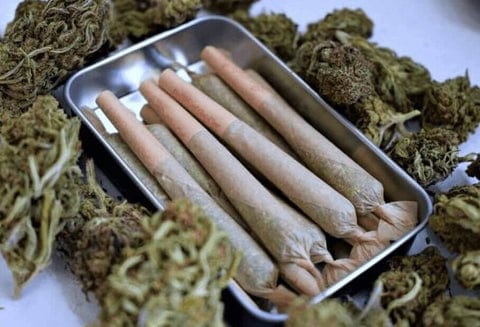
As with moon rocks, Asteroids are smoked. You can break it up, just like any other flower, and smoke it in the form of a joint, pipe, bong, or vape.

Usually, it takes 2-15 minutes for the effects to fully kick in. Many people often experience the effects for several hours, which makes it a popular aid for sleep. It is possible that you’ll feel groggy the next day. For that reason, you should clear some time out of your schedule if you want to try it for the first time.

Tips for smoking Asteroids for the first time

New to smoking Asteroids? Here are a few ways to make the most of your experience.

  • Choose a safe, comfortable place to smoke in. There is always a risk of being uncomfortable or sleepy, so it’s best to do it in a place like your home. If possible, there will be no loud distractions (like a roommate having a party) or annoying intrusions (like someone bugging you to run an errand). You want to be able to chill and enjoy the effects.
  • Block out enough time. Because you might be very sleepy, even the next morning, it’s a good idea to have the evening and morning to yourself. This way, you can sleep in and allow yourself plenty of time to relax.
  • Keep comforts on hand. You can’t be sure exactly how Asteroids will affect you until you try them, but you could try to anticipate what you will need. That way, you’re not running around and looking for things when you’re meant to be relaxing. If you’re chilling, you might want your favorite snacks, a relaxing playlist, a bottle of water, some cozy blankets, and a laptop ready for Netflix or video games. If you’re smoking to get creative, keep your art supplies or journal nearby.
  • Start with a small amount. It bears repeating: Asteroids are extremely strong and all you need is a tiny bit to get high. Once you’ve had a small amount, wait at least half an hour for the effects to kick in. If you want a more potent effect, you can have a little bit more.

If you’re looking for a great treat, a potent dose of CBD, or a unique gift for a hemp enthusiast, Asteroids are a great choice. With a high percentage of cannabinoids and a pleasant terpene profile, they’re fantastic for occasional use, whether recreational or health-related.

FAQ

What are moon rocks weed?

The moon rocks weed is a THC megazord. It's basically cannabis buds dipped or sprayed with hash oil, then rolled in kief. The primary benefit of moon rocks is their high concentration of THC, which averages over 50%. Despite moon rocks' relatively newness, the market already has a variety of them, including hemp varieties high in CBD and those without THC.

How to smoke moon rocks weed?

The moon rocks weed aren't complex, but smoking them requires a little more work than smoking flowers. It is not possible to roll a joint with smoke moon rocks because they're too sticky. Grinding the moon rocks will significantly clog up your grinder and all of the kief coating will likely be removed. In addition, the dense texture of this flower requires holding a flame to the bowl for longer than you would with a dry flower. It is better to use hemp wick rather than inhale the butane from a lighter.

What type of weed are those moon rocks weed?

Girl Scout Cookies was the first strain which moon rocks used. There are many strains of moon rocks available today. It is even possible to make your own. You can choose quality buds of either Sativa, Indica, or a blend of the two. The buds are then sprayed/dipped in pure hash oil and then infused with kief. There are no additives or fillers in moon rocks weed.

How potent are moon rocks weed?

There is no doubt that moon rocks weed contains a large percentage of THC. The majority of moon rocks contain more than 50% THC since they combine flower and two concentrates. Since each type of product has its own potency, there is wide variation between products when it comes to potency. Moon rocks are also usually coated with several layers of concentrated concentrate, making them powerful. First-time smokers should avoid a bowl of moon rocks because of their potency.


May 28, 2020
Read More
The Entourage Effect - What is the Entourage Effect in Cannabis

The Entourage Effect is a concept you may have come across when researching CBD products. In fact, one of the reasons why many people opt for full-spectrum CBD instead of pure CBD is because of the entourage effect.

Understanding the entourage effect will help you understand how CBD affects your body. This will enable you to choose CBD products that affect your body the way you desire.

If you’ve shopped for CBD products, you’ll have noticed that they fall into three main categories:

1) CBD isolate, which is pure CBD.

2) Full-spectrum CBD, which contains high amounts of CBD as well as small amounts of the other cannabinoids and terpenes found in the plant, as well as flavonoids and terpenes.

3) Broad-spectrum CBD, which is full-spectrum CBD with some components removed, usually THC and CBD.

The type of CBD you choose depends on your needs. Many people opt for CBD isolate if they only want pure CBD. But what’s the benefit of full-spectrum CBD and broad-spectrum CBD? Why does it matter whether there are other cannabinoids in the product?

In essence, the magic of full-spectrum CBD and THC is in the entourage effect.

What is the Entourage Effect of CBD and THC?

The entourage effect is the theory that all compounds in the cannabis plant and hemp plants are more beneficial when taken together.

The Cannabis plant and hemp plants contain dozens of cannabinoids—perhaps as many as 120. The most well-known cannabinoids and terpenes are CBD and tetrahydrocannabinol, or THC. Every cannabinoid seems to work differently, and research suggests each one has a different effect on the body. Cannabinoids affect various parts of our body, from our skin and digestive system to our brain and heart.

In addition to cannabinoids, there are flavonoids, which affect the flavor and color of the bud, and terpenes, which affect the bud’s aroma and may have beneficial health entourage effects.

The entourage effect is the idea that cannabinoids and terpenes work better together. In other words, when CBD and THC are in the presence of other cannabinoids, their effect is more potent and more beneficial than when you take each cannabinoid individually. It is also believed that terpenes and flavonoids also add to the entourage effect.

One example of the power of the entourage effect is how CBD tames the effect of THC. THC, which gets you high, can have some side effects. For example, some people find that it makes them anxious. A 2019 study shows that CBD seems to offset some of these side effects, thus “balancing” the not-so-great effects of cannabis and THC without reducing its benefits and entourage effect.

Another example of the entourage effect in action is Sativex. Sativex is an FDA-approved medication, often used to treat pain in people with multiple sclerosis. Sativex combines CBD and THC, as researchers found that they soothe pain better when they’re used together.

A 2011 study also suggests that, when terpenes and cannabinoids are taken together, they could have a more potent effect in treating:

  • Pain and inflammation
  • Anxiety and stress
  • Epilepsy and other seizure conditions
  • Cancer
  • Fungal infections

Further research conducted in 2018 found that certain flavonoids and terpenes could have beneficial properties, such as anti-inflammatory and neuroprotective effects. The authors suggested that these compounds, when combined with cannabinoids and terpenes, could have a more potent and beneficial effect.

With all this in mind, it’s no wonder why so many people opt for full-spectrum CBD and THC. However, it’s important to remember that high doses of THC can show up in a drug test—so be cautious when opting for high-THC products.

What do Other Cannabinoids Do?

You’ve heard of THC and CBD, but what are the other cannabinoids called? And more importantly, what do they do?

Tetrahydrocannabinol (THC)

Along with CBD, THC is one of the most well-known and well-studied cannabinoids. THC is the part of cannabis that gets you high. But THC might be able to do more than that. Research suggests that it might also have the following properties:

  • Anti-pain. Like CBD, THC could be used to treat pain, according to research. Dronabinol has been shown to reduce pain, which is another reason why it can be helpful for HIV/AIDS patients.
  • THC might be able to improve sleep quality. A 2017 review of studies note that some evidence suggests it makes you sleep worse, while other studies suggest THC could treat insomnia.
  • PTSD treatment. Since THC reduces the amount of time we spend dreaming, it might be able to help PTSD patients who struggle with nightmares.
  • One side effect of the cannabis plant is the “munchies”- THC can make you hungry. Dronabinol, a synthetic version of THC, is an appetite-stimulant given to HIV/AIDS patients who have a low appetite.
  • Anti-nausea. THC could reduce chemotherapy-induced nausea and vomiting. In fact, over 30 studies suggest that synthetic THC can treat CINV.

THC remains an interesting cannabinoid, and there’s a lot we still don’t know about it. It’s still being studied further by researchers. Future research will help us understand the effects of cannabis and THC better.

Cannabigerol (CBG)

CBG is fast gaining popularity, with some calling it “the new CBD”. CBG is the “mother cannabinoid” - every other cannabinoid comes from CBG. It’s also the most expensive cannabinoid to produce.

While the research on CBG is still in its infancy, research has identified quite a few potential benefits of CBG. For example, it may have the following properties:

  • A promising 2015 study showed that CBG seemed to protect neurons in mice with Huntington’s disease. The study concluded that CBG should be tested for its potential to treat other neurodegenerative diseases, too.
  • Anti-inflammatory. A murine study showed that CBG seemed to reduce the inflammation associated with inflammatory bowel disease.
  • Anti-bacterial. Some research suggests that CBG might be able to kill methicillin-resistant Staphylococcus aureus (MRSA), which causes staph infections.
  • Anti-cancer. A 2014 study showed that CBG slowed the growth of colon cancer cells in mice.
  • Mood-boosting. Studies suggest that CBG increases the “bliss molecule,” anandamide, which improves your mood. It also might work as a GABA reuptake inhibitor, which can help reduce anxiety.

Not sure where to get CBG products? Check out our 5000mg CBG capsules, our CBG hemp flowers, and our CBG kief.

Cannabinol (CBN)

When THC is exposed to carbon dioxide for a long period of time, it becomes CBN. For this reason, more mature cannabis tends to turn into CBN. There are a number of potential benefits of CBN, although they are mostly conducted on rats and mice, and all need to be studied further.

These potential properties include:

  • One lab study suggested that CBN could kill MRSA bacteria, which causes staph infections.
  • Anti-inflammatory. A rodent study conducted in 2016 showed that CBN reduced inflammation in rats with arthritis.
  • Appetite stimulant. A study suggested that CBN increases the appetite—it made rats eat more food, and eat for a longer period of time.
  • Another study conducted on rodents found that CBN delayed the onset of ALS in rats.

Cannabichromene (CBC)

There are relatively few studies on CBC. However, the studies that are out there are quite promising. CBC might be able to treat:

  • Pain and inflammation. As with most cannabinoids, CBC seems to reduce the pain and inflammation associated with osteoarthritis, according to a 2011 study. Another study showed that CBC and THC together reduce inflammation.
  • A 2016 study suggests that CBC could treat acne.
  • A 2010 study suggested that, together with THC, CBC might be able to treat depression.
  • A 2006 study found that CBC is the second-most-potent cannabinoid at slowing the cancer cells, second to CBG. Unfortunately, this hasn’t been studied in humans.

CBC shows a number of potential benefits, but these all need to be studied further before we fully understand its effects on humans.

While these aren’t the only cannabinoids there are, they’re the most well-studied and possibly the most important. Future studies will probably uncover the importance of many other cannabinoids which could be harnessed to treat certain health conditions.

How to Benefit from the Entourage Effect and full spectrum CBD

One of the simplest ways to benefit from the entourage effect is to look for products that are “full-spectrum.” We have a range of full-spectrum items including but not limited to, full-spectrum CBD tinctures, and a broad-spectrum tincture option for those who don’t want to ingest THC.

Hemp flower is, by definition, full-spectrum. As it’s not processed and the form isn’t changed, we don’t remove any of the natural cannabinoids found in the bud. Our high-quality flowers allow you to make your own potent extracts and concentrates - and, of course, you can smoke them if you prefer.

Full-spectrum CBD doesn’t just come in the form of buds and tinctures. Our edibles and topical CBD, for example, also contain full-spectrum CBD. Experiment with different forms of CBD products until you find a product that you enjoy using.

Understanding the entourage effect can equip you with the knowledge you need to choose the best CBD products for your needs. Remember to speak to your doctor before using CBD to treat any particular ailment.

May 5, 2020
Read More
BLACK TIE DAYS 2019 INFO

🔥 #BLACKTIEDAYS 2019 🔥

Sale Ended December 3rd.

50% off all Black Tie CBD Merchandise

(price drop - no code needed)

40% off 1g Flowers
(code = Gram40)

35% off 3.5g Flowers
(code = BTD8)

30% off 7g Flowers
(code = BTD7)

25% off 1g Lemon Cream Diesel
(code = LCD25)

25% off Topicals & Bath Bombs
(price drop - no code needed)


20% off Edibles

(price drop - no code needed)

20% off Concentrates
(code = Hash20)

20% off 1/2 Ounces

15% off Coffee & Tea
(price drop - no code needed)

Buy 2 get 1 50% off Tinctures
(code = Drop50)

Buy 2 get 1 50% off Mini Ounces
(code = Mini50)

Free Shipping on Orders $50 or more.

$5 Shipping on Orders $50 or less.

😎 Sale Ended December 3rd. 😎

👀 BlackTieCBD.net 👀

Our site allows one coupon code per checkout so you will need to make separate orders if you use more than one discount if it’s not listed as “Price Drop”. We've made shipping $5 on orders under $50, and FREE SHIPPING on orders over $50 so don't stress multiple orders. If you have any questions please contact support@blacktiecbd.net or give us a call at 888-702-2285.

November 25, 2019
Read More
In response to Andrew Donley of ABC 33/40's article yesterday...


In response to recent publications concerning the legality of hemp flower in Alabama we would like to share the following information.

SELLING HEMP AND HEMP PRODUCTS

  1. What kind of license is required for the retail sale of CBD oil and other hemp products?
    Retail sale of processed hemp products does not fall within the regulatory authority of the Plant Protection Division of the Alabama Department of Agriculture and Industries. (agi.alabama.gov)

Our hemp flower products are processed (trimmed) industrial hemp flowers that have been legally produced under a state Department of Agriculture license, third-party Lab tested and packaged in fresh-seal jars thus making them a purchasable product in accordance with the laws of the State of Alabama.

A recent article written by Andrew Donley of ABC 33/40 could leave some to believe that processed CBD items, including processed industrial hemp flowers are illegal to sell in Alabama.  The aforementioned article has no credible sources cited and should be retracted due to inaccuracies that could hinder legal businesses in the State of Alabama.

Respectfully,

BLACK TIE CBD

References:

(3) Hemp products.  Any and all products made from industrial hemp, including, but not limited to, cloth, cordage, fiber, food, fuel, paint, paper, particleboard, plastics, seed, seed meal and seed oil for consumption, and seed for cultivation if the seeds originate from industrial hemp varieties. (agi.alabama.gov)

(4) Industrial hemp.  All parts and varieties of the plant Cannabis sativa, cultivated or possessed by a licensed grower, whether growing or not, that contain a delta-9 tetrahydrocannabinol concentration of not more than 0.3 percent on a dry weight basis.  Industrial hemp shall be considered an agricultural crop or an agricultural commodity, or both, in all respects under state law.  The term excludes marijuana as defined in subdivision (14) of Section 20-2-2 .

MONTGOMERY, Ala. - The Alabama Hemp program launched in the beginning of 2019, after the Agriculture Improvement Act of 2018 (i.e. Farm Bill) declassified hemp as a schedule 1 drug and deemed hemp as an agriculture commodity.  This legislation defines hemp as all parts of the plant containing less than 0.3% THC, including derivatives, extracts, and cannabinoids. (agi.alabama.gov)

Original Article :

https://abc3340.com/news/local/raw-hemp-flower-being-sold-illegally-in-alabama

October 29, 2019
Read More
CBG

Sometimes the most minor of molecules are the ones with the greatest impact. Such appears to be the case with CBG—the “first” cannabinoid that develops in cannabis. This seemingly insignificant cannabinoid is actually responsible for the creation of CBD, THC, and other cannabinoids catching the attention of scientists and consumers the world over.

Usually found in concentrations of <1% in most hemp plants, it’s no wonder this compound hasn’t received as much attention as others. However, that is quickly changing as more information is being unveiled about this once-overshadowed cannabinoid.

Below, we’ll take a closer look at CBG and the role it plays in the production of other cannabinoids. We’ll also explore its unique effects on the body, and how it differs from other hemp-derived cannabinoids.

What is CBG?

CBG, or cannabigerol, is a phytocannabinoid. Unlike endocannabinoids, which are produced by the body, phytocannabinoids are sourced from plants like cannabis. CBG is what's known as a non-intoxicating cannabinoid—it doesn’t get you high.

CBG: a not-so-minor cannabinoid

By the time cannabis is harvested, dried, and processed, it usually contains only trace amounts of CBG (below 1%). Hence, it is generally labelled a “minor” cannabinoid.

However, CBG—or rather, its acidic form, CBGA—is actually the first cannabinoid acid to develop in the cannabis plant. As such, it is sometimes referred to as the “stem cell” of cannabis. It is found in its highest concentrations in flowering cannabis plants. The acidic form is simply CBG with an extra carboxyl group—the “A”.

As plants continue to grow, enzymes convert CBGA into either THCA (tetrahydrocannabinolic acid), CBDA (cannabidiolic acid), or CBCA (cannabichromenic acid).

Following harvest, plants are usually dried and processed. The heat or UV light used in these scenarios breaks down these acidic cannabinoids into their non-acidic counterparts, such as THC, CBD, and CBC. This phenomenon is known as decarboxylation—the removal of a carboxyl group.

Decarboxylation also produces many other cannabinoids (at least 100), all of which originally stem from CBGA.

Most of the cannabis strains on today’s market are bred to be high in THC and/or CBD; and the more THC or CBD present in a plant sample, the less CBG. Hence, strains usually contain only small amounts of CBG.

However, some breeders are experimenting with crossbreeding, genetic manipulation, and even unique harvesting patterns to create strains that contain higher levels of this cannabinoid.

Bedrocan BV Medical Cannabis in the Netherlands, for example, has began harvesting some of its plants earlier to create a final product with higher levels of CBG.

What are the effects of CBG?

As we mentioned earlier, CBG is a non-intoxicating cannabinoid. Therefore, it does not interact with the endocannabinoid system in a way that interrupts mental faculties. However, just like any other cannabinoid, CBG does interact with the endocannabinoid system in a variety of ways.

CBG has been shown to increase appetite in two rat-based studies conducted by researchers at the University of Reading (UK) in 2016 and 2017.

Some studies also suggest that CBG may inhibit the growth of some tumours, while others show it may have neuroprotective effects. A 2014 study published in the PLoS One medical journal also claims that some CBG-derived products could suppress the body’s immune response.

Dr Bonni Goldstein, a medical doctor specialising in medicinal cannabis, claims that CBG can inhibit GABA neurotransmission in the brain, as well as affect pain, inflammation, and more.

“When GABA [uptake] is inhibited, you actually have muscle relaxation and you have anti-anxiety effects, so it [CBG] appears to promote similar effects that CBD Oil has. It also appears to have antidepressant and some modest antifungal properties” said Goldstein in a video for WeedMaps.

In 2013, researchers from the Department of Pharmacy at the University of Naples Federico II (Italy) tested the effects of CBG on an experimental model of experimental Inflammatory Bowel Disease (IBD). The researchers found that CBG has potential anti-inflammatory and antioxidant properties (Inflammatory Bowel Disease).

Unfortunately, because CBG has been overshadowed by cannabinoids THC and CBD, not a lot of research has gone into fully understanding this cannabinoid and its effects. However, that is slowly changing as people begin to realise the potential and importance of this compound.

CBG vs CBD. What is the difference?

Despite originating from CBG Oils, CBD Oil is completely distinct from CBG in both chemical structure and concentration within cannabis plants.

Because it is only found in trace amounts in dried plant material, it is only recently that manufacturers have begun to focus more attention on optimising CBG levels in products like CBD oils, supplements, and salves. It’s clear that CBG is an essential cannabinoid, but it’s yet unclear exactly how to use it to our benefit.

CBG (cannabigerol) and CBD (cannabidiol) are two of the many chemical compounds present in cannabis which can be used as medication. While they share similarities, there are important differences between them.

The main difference between CBG vs CBD is how the chemicals interact with our brain's cannabinoid receptors.

The cannabis plant contains at least 85 cannabinoids. These are chemical compounds which have an effect on the body by bonding with cannabinoid receptors in the brain. The most widely recognized and well studied of these chemicals is tetrahydrocannabinol (THC). THC is famous for being the main psychoactive component of cannabis, producing the high that gives the plant its medical and recreational effects.

However, there are many other less famous cannabinoids which also produce a range of effects on the brain. Two compounds which we will be focusing on in this article are cannabidiol (both CBD) and cannabigerol (CBG). While both CBD and CBG can be isolated from the cannabis plant, the main difference between them lies in how they interact with cannabinoid receptors.

As a result of this difference in action on cannabinoid receptors, CBD and CBG produce different effects when isolated from each other and when combined together in a full spectrum cannabis extract or both CBD product.

CBG vs CBD: What is the difference in effects?

The primary difference between CBD and CBG comes from their unique interaction with cannabinoid receptors. Cannabinoid receptors are found all over the body and brain, and modulate pain, inflammation, stress responses, mood etc. The way these chemical compounds interact with our cells is what gives them both their therapeutic and psychoactive effects.

Cannabinoid receptors are made up of many subunits. To date, scientists have identified two subtypes that play the largest role in our experience of cannabinoids: CB1 and CB2.

CB1 is mostly found in the brain, but also present in some other parts of the body. It has been linked to memory formation, reward seeking behavior, motor coordination, pain sensation, and more. CB2 is primarily found in the immune system where it regulates inflammation.

CBG vs CBD: What Is The Difference In How They Interact With Cannabinoid Receptors?

A 2010 study published by a group of scientists from Italy took a detailed look at the structure-activity relationships of CBG, CBD and THC.

The study found that both CBD and CBG interact strongly multiple cannabinoid receptors including the serotonin 5HT1a receptor. However, they differ in how they interact with cannabinoid receptors, mainly with respect to their effects on the endocannabinoid system (the biological system responsible for processing cannabinoids).

For example, CBD has no effect at all on the CB1 receptor, while CBG does. This is because CBD lacks affinity for CB1 due to an extra carbon atom in its molecular structure.

There was also found to be more CBG binding sites than CB2 binding sites throughout many parts of the brain and body, indicating that it's able to affect many different processes via its interaction with cannabinoid receptors.

CBG vs CBD: What Are The Benefits Of Each?

There are many differences between the effects CBG vs CBD produce, which also affects their therapeutic benefits. However, both CBG and CBD have potential uses as medication.

Cannabidiol (CBD)

This cannabinoid is famous for its non-intoxicating nature. It's this quality which has made CBD useful in treating children and people who can't tolerate the 'high' associated with THC and other cannabis compounds.

Also, CBD has been found to be an effective anticonvulsant, effectively treating seizures and epilepsy. This has been demonstrated in both animal and human studies.

Another study found that CBD reduced psychotic symptoms in schizophrenia, such as delusions and hallucinations which are often difficult to treat. These promising results show that CBD could be a useful medication for people with psychosis resulting from conditions such as bipolar disorder and schizophrenia.

Cannabigerol (CBG)

While CBG has been found to be non-psychoactive it does appear to improve the effects of THC. This is because, like CBD, it can modulate and reduce the negative side effects such as anxiety and paranoia that THC causes in some people.

As a result of this 'boosting' effect on THC, CBG appears to increase the pain relieving qualities of THC. This could make CBG useful in strains of cannabis used for medical benefits and purposes.

October 2, 2019
Read More
A Message to Our Customers About Our Products and Vaping

In light of recent concerning news about e-cigarette products, Black Tie CBD would like to state our ongoing commitment to consumer safety and the highest-level manufacturing processes. We want to reassure you that all Black Tie CBD products adhere to the highest standards of quality and reliability in the industry.
 
Our vaporization hardware is manufactured with CCELL® technology and our suppliers follow all ISO and GMP guidelines. At no point in the manufacturing process does Black Tie CBD use cutting agents or potentially harmful additives like Vitamin E acetate. Black Tie CBD hardware is manufactured using medical and food grade materials. Hardware components pass stringent testing, including evaluations for heavy metals per state regulations.

While federal and state investigations are ongoing, the FDA has released the following guidance for the public as of September 6, 2019:

“Because consumers cannot be sure whether any THC vaping products may contain Vitamin E acetate, consumers are urged to avoid buying vaping products on the street, and to refrain from using THC oil or modifying/adding any substances to products purchased in stores. Additionally, no youth should be using any vaping product, regardless of the substance.”


We encourage our customers to verify the authenticity and safety of suppliers at every point in the supply chain. For safety, consumers should purchase compliant, tested products through licensed dispensaries, delivery services, or retailers only. Ingredient-containing products should never be modified after purchase.
 
Thank you for your continued loyalty and support. Remember, when you choose Jupiter, you are choosing to partner with an industry steward, one that is proud to focus on not only performance but consumer safety as well.
 
Please contact support@blacktiecbd.net with any questions. Don’t hesitate to let us know how we can provide further support.

September 12, 2019
Read More
Big Week for Black Tie CBD

It's going to be a big week for Black Tie CBD! The crew is headed to Portland tomorrow to welcome the winner of the Golden Ticket Raffle, and to begin our Harvest at the farms. We are planning to bring you a live stream or 2 on our YouTube, new videos, and a ton of new images of the crop. We had a small setback with our main Instagram being taken down without reason, but we will be back with an even better page. Keep up with us on our trip for a lot of exclusives and what we've had going on at the farms.


September 3, 2019
Read More
Shipping Policy Reminder

Shipping Policy Reminder

The only shipping service guaranteed by USPS is Priority Mail Express. 
The other services are not guaranteed. If a Priority Mail Express parcel does not arrive by the estimated time of delivery on USPS.com , you may request a full refund of the shipping cost.

The shipping estimate is simply that, an estimate. It generally takes 2-3 BUSINESS days for priority mail and 5-7 BUSINESS days for First Class.
We ask that our customers please wait 7 days prior to contacting us regarding shipped items. Especially if the items are shipping via First Class.

First Class service does not come with insurance. Priority Mail does. There is $50 insurance automatically included with Priority Parcels. If the post office loses your package, you can file a claim for this amount.


Thank you for your continued support.


Black Tie CBD

August 30, 2019
Read More
No result found

Need help? We’re here for you, and ready to answer your questions.

Call US
Secure Checkout
Satisfaction
Guarantee
Free Shipping
$100+
Easy
Returns
30 Day
Trial